Functional medicine vs. traditional healthcare sets the stage for this enthralling narrative, offering readers a glimpse into a story that is rich in detail and brimming with originality from the outset. As we delve into the stark contras between these two approaches to healthcare, a world of insights and revelations awaits.
Exploring the core principles, patient-centered approaches, root cause analysis, and personalized treatment plans of functional medicine versus the traditional healthcare practices will shed light on the intricacies of each system and how they impact patient outcomes.
Functional Medicine Overview
Functional medicine is a holistic approach to healthcare that focuses on identifying and addressing the root causes of illness, rather than just treating symptoms. It considers the unique genetic, environmental, and lifestyle factors that influence individual health.Functional medicine approaches healthcare by looking at the body as a whole system, rather than focusing on specific organs or symptoms in isolation.
Practitioners aim to create personalized treatment plans that address the underlying imbalances in the body and support the body's natural healing processes.
Core Principles of Functional Medicine
- Personalized care based on individual genetics, environment, and lifestyle factors.
- Focusing on prevention and addressing the root causes of illness.
- Viewing the body as an interconnected system, rather than separate parts.
- Emphasizing patient education and active participation in their healthcare.
Examples of Functional Medicine Approaches
- Using advanced laboratory testing to identify underlying imbalances in the body.
- Prescribing personalized nutrition plans to support optimal health.
- Integrating mind-body practices such as meditation and yoga into treatment plans.
Comparison with Traditional Healthcare Practices
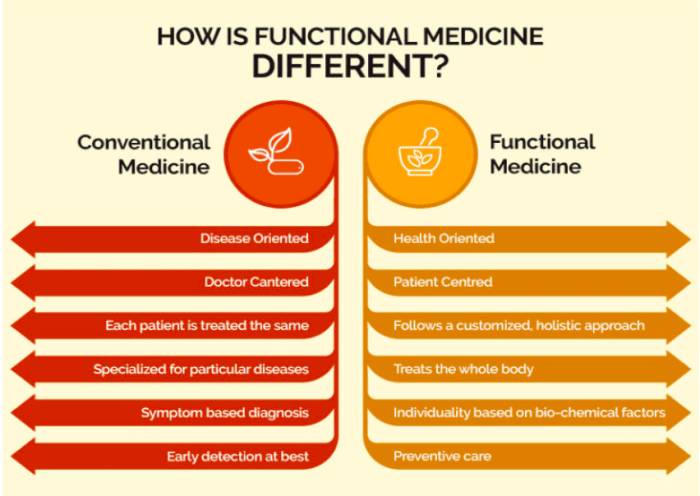
Functional medicine focuses on treating the root causes of illness and promoting overall wellness, while traditional healthcare often relies on pharmaceutical interventions to manage symptoms. Functional medicine practitioners spend more time with patients to understand their unique needs, whereas traditional healthcare providers may have limited time for each appointment.
Traditional Healthcare Practices
Traditional healthcare practices encompass a wide range of methods and treatments that have been used for centuries to address various health issues. These practices often focus on treating symptoms rather than addressing the root cause of the problem. Let's delve into some common traditional healthcare practices and treatments.
Common Methods and Treatments
- Diagnostic tests: Traditional healthcare often relies on diagnostic tests such as blood tests, X-rays, and CT scans to identify health issues.
- Medication: Pharmaceutical drugs play a significant role in traditional healthcare, with prescriptions often given to alleviate symptoms.
- Surgery: In cases where other treatments are ineffective, surgery may be recommended to address the underlying health issue.
- Physical therapy: Traditional healthcare may include physical therapy to help patients recover from injuries or manage chronic conditions.
Role of Pharmaceuticals
- Pharmaceuticals are a cornerstone of traditional healthcare, with medications being prescribed to manage a wide range of health conditions.
- These drugs are designed to alleviate symptoms and provide relief, but they may not always address the root cause of the issue.
- There is a growing concern about the overuse of pharmaceuticals and their potential side effects, leading some individuals to seek alternative approaches like functional medicine.
Patient-Centered Approach
Functional medicine takes a patient-centered approach, focusing on treating the root cause of health issues rather than just managing symptoms. This approach involves looking at the individual as a whole, considering factors like lifestyle, genetics, environment, and emotional well-being.
Functional Medicine Prioritizes Patient Interaction
In functional medicine, patients are actively involved in their healthcare journey. The practitioner spends more time with the patient during consultations, listening to their concerns, and working together to develop a personalized treatment plan. This collaborative approach empowers patients to take control of their health and make informed decisions.
- Practitioners in functional medicine may conduct detailed assessments, including comprehensive lab tests, to understand the unique biochemistry of each patient.
- Treatment plans often incorporate a combination of nutrition, lifestyle changes, supplements, and other holistic approaches tailored to the individual's needs.
- Follow-up consultations are common in functional medicine to track progress, make adjustments to the treatment plan, and ensure the patient's overall well-being.
Comparison with Traditional Healthcare Systems
Traditional healthcare systems, on the other hand, may follow a more disease-centered approach, focusing primarily on symptom management through medications or procedures. Patient interactions in traditional healthcare settings are often shorter, with less emphasis on exploring the underlying causes of health issues.
- Patients in traditional healthcare settings may feel rushed during appointments, with limited time to discuss their concerns or ask questions.
- Treatment plans typically involve prescribing medications to alleviate symptoms without necessarily addressing the root cause of the problem.
- Follow-up care may be less frequent in traditional healthcare, leading to a lack of continuity in managing chronic conditions.
Differences in Patient Outcomes
The patient-centered approach in functional medicine has been associated with improved patient outcomes compared to traditional healthcare practices. By addressing the root cause of health issues and empowering patients to make lifestyle changes, functional medicine can lead to long-lasting improvements in overall health and well-being.
- Patients following functional medicine protocols may experience reduced symptoms, improved energy levels, better mental clarity, and enhanced quality of life.
- Long-term benefits of functional medicine can include disease prevention, reduced dependency on medications, and a lower risk of developing chronic conditions.
- Studies have shown that patients who actively participate in their healthcare decisions and follow personalized treatment plans are more likely to achieve positive health outcomes.
Addressing Root Causes
In functional medicine, there is a strong emphasis on identifying and addressing the root causes of health issues rather than just managing symptoms. By looking at the underlying factors contributing to a patient's condition, practitioners can create personalized treatment plans that focus on restoring balance and promoting long-term health.
Traditional healthcare, on the other hand, may often prioritize symptom management over root cause investigation. This approach can lead to temporary relief but may not provide lasting solutions or prevent future health problems.
Importance of Addressing Root Causes
Addressing root causes is crucial for achieving long-term health benefits and overall well-being. By understanding what is driving a patient's symptoms or disease, healthcare providers can tailor treatments to target the underlying issues and promote true healing. This approach not only alleviates current symptoms but also helps prevent recurrence and future complications.
Personalized Treatment Plans
Functional medicine focuses on creating personalized treatment plans for each patient, taking into account their unique genetic makeup, lifestyle, and environmental factors. This approach allows healthcare providers to tailor treatments specifically to address the individual needs of the patient, rather than following a one-size-fits-all approach.
Contrast with Traditional Healthcare
In traditional healthcare practices, treatment plans are often standardized based on the typical symptoms associated with a particular condition. This can lead to patients receiving similar treatments without consideration for their specific circumstances or underlying causes of their health issues.
- Functional medicine's personalized treatment plans take into account the whole person, considering factors beyond just symptoms.
- Traditional healthcare may rely more on general protocols and guidelines, potentially overlooking individual variations in patient needs.
- Personalized treatment plans in functional medicine can lead to more effective and efficient outcomes by addressing the root causes of health issues.
Final Wrap-Up
In conclusion, the comparison between functional medicine and traditional healthcare opens up a world of possibilities for patients seeking optimal health. By understanding the nuances of each approach, individuals can make informed decisions about their healthcare journey, paving the way for a future where personalized, root cause-focused care reigns supreme.
Top FAQs
What are the core principles of functional medicine?
Functional medicine focuses on treating the root cause of illnesses rather than just symptoms.
How do patient interactions differ between functional medicine and traditional healthcare?
Functional medicine prioritizes patient-centered care, involving patients in decision-making and treatment plans more than traditional healthcare.
Why is addressing root causes important in functional medicine?
Identifying and addressing root causes in functional medicine leads to long-term health benefits and prevents recurring health issues.
How are treatment plans personalized in functional medicine compared to traditional healthcare?
Functional medicine creates individualized treatment plans based on a patient's unique needs, unlike the standardized approach of traditional healthcare.